United Gymnastics Academy
United Gymnastics Academy is dedicated to giving to, enhancing, and enriching lives through participation in the sport of Gymnastics. UGA seeks to offer opportunities for children ages 18 months to 18 years. Every attempt is made to offer programs that fit the needs, motivation and skill level of each student. Programs are offered from beginner through competitive team gymnastics and training from 45 minutes 1-day per week up to 20+ hours per week of intensive training.
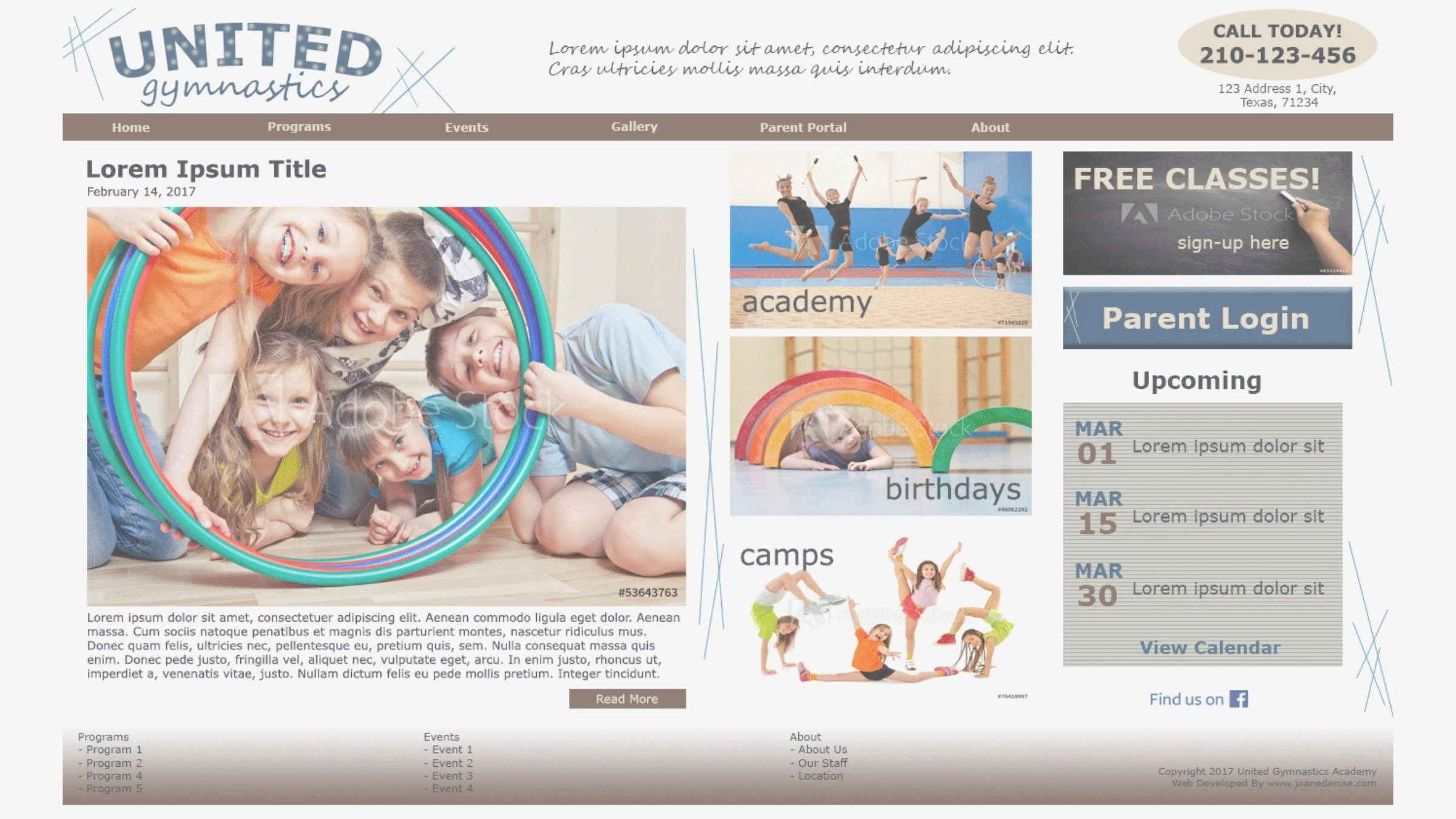
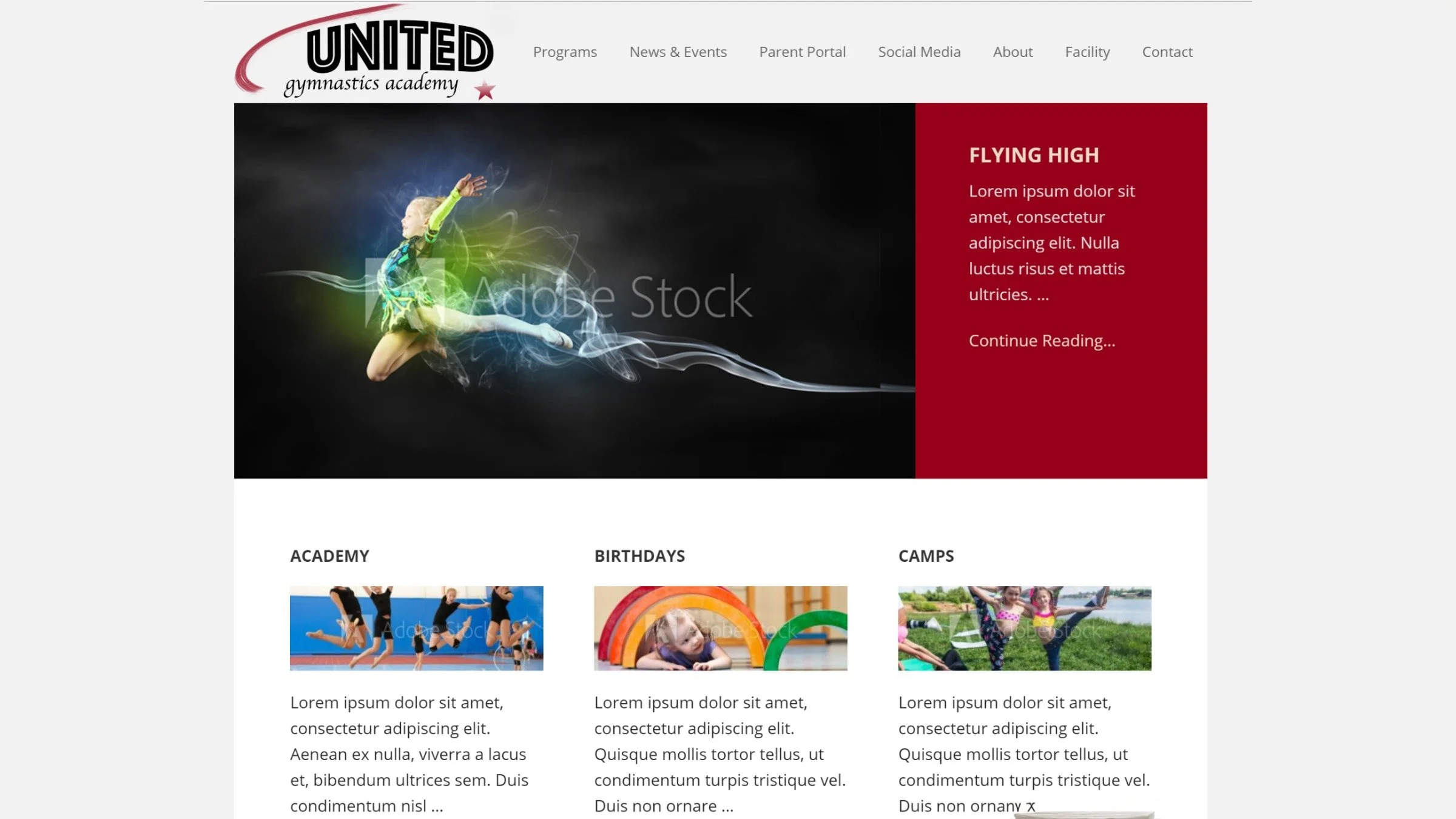
In 2016, I was asked to update United Gymnastics’ website, moving it from a WIX template to something more custom. At the time, I was already familiar with WordPress and excited to take on custom theme development. Genesis was relatively new for me then, and I wanted to explore it as a framework. The site itself was built using Elementor to structure the layout and content.
Looking at the site now, the 2026 version doesn’t quite feel right. The mobile masthead is currently being reused on desktop, and even as a mobile treatment, it never fully reflected what I wanted to show—it feels more like a draft than a finished decision. I’ve been wanting to revisit and refine the entire site, and I’m currently waiting for consent from the owners to do so.

Around that time, I had just gotten my first tablet—a Surface—and I loved it. Being able to draw and experiment with a stylus opened up a whole new way of working for me. I hadn’t fully discovered the Adobe Creative Cloud tools yet, so I used a native drawing app on the Surface to draft the logo and explore calligraphy ideas.
The United Gymnastics logo was inspired by a stock photo from Adobe Stock. The gymnast’s graceful arm movement naturally formed an inverted swoosh, which became the core of the mark.
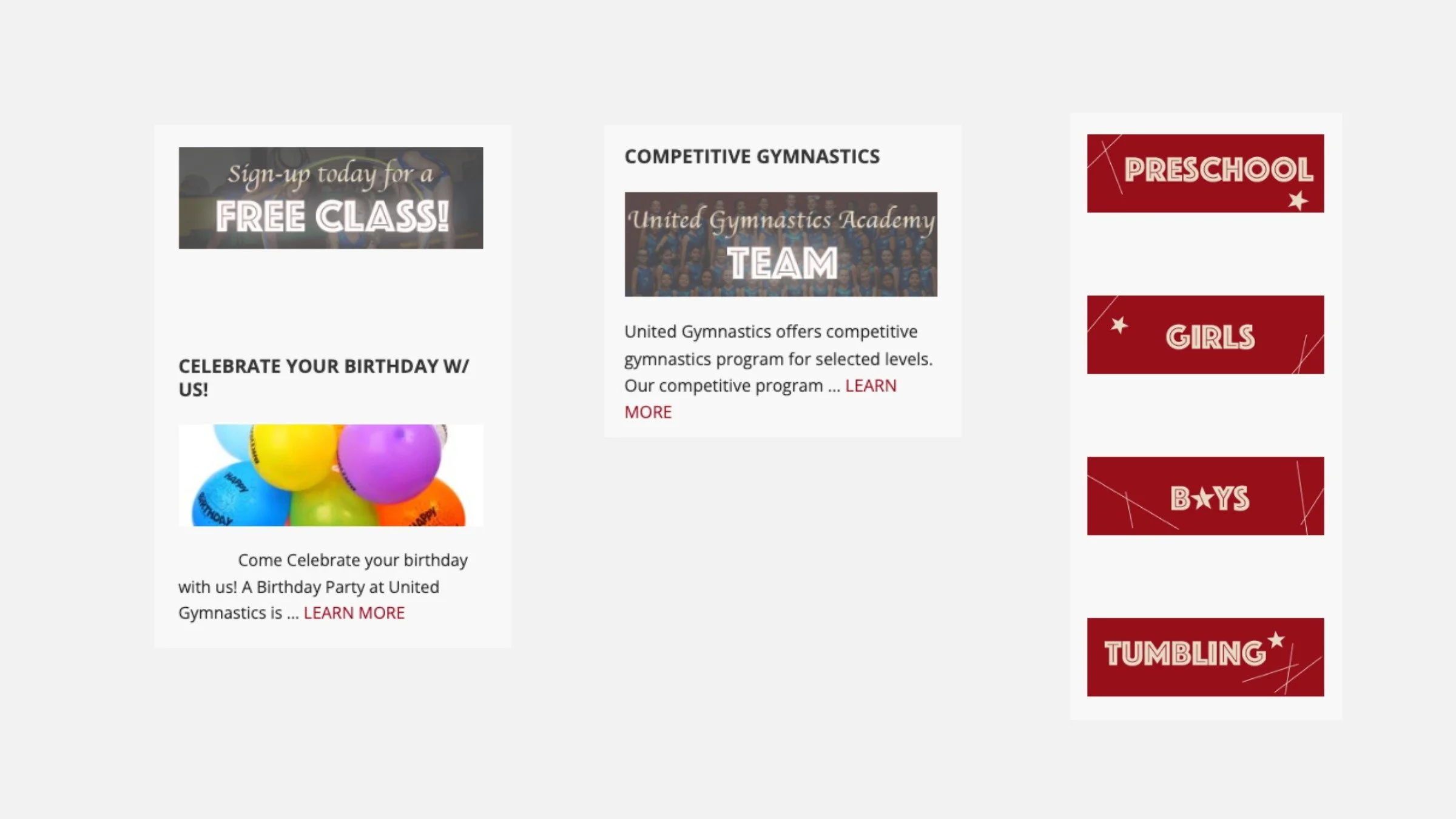
The star was added later, almost as an afterthought, but it quickly became a key visual element and carried through many other parts of the website.
During this project, I leaned heavily on my software development background and applied it throughout the process. I began with wireframes—styled ones—but eventually had to scrap the initial approach in order to stay within the constraints of WordPress theme development, which I was still learning at the time.
In my day-to-day role, I don’t usually work directly with aesthetics—things like photography or how imagery shapes the overall experience. This project made me slow down and really see those elements as part of the system, not just decoration. It ended up being a genuine learning experience.
I hope to revisit and revise this website with everything I’ve learned since.